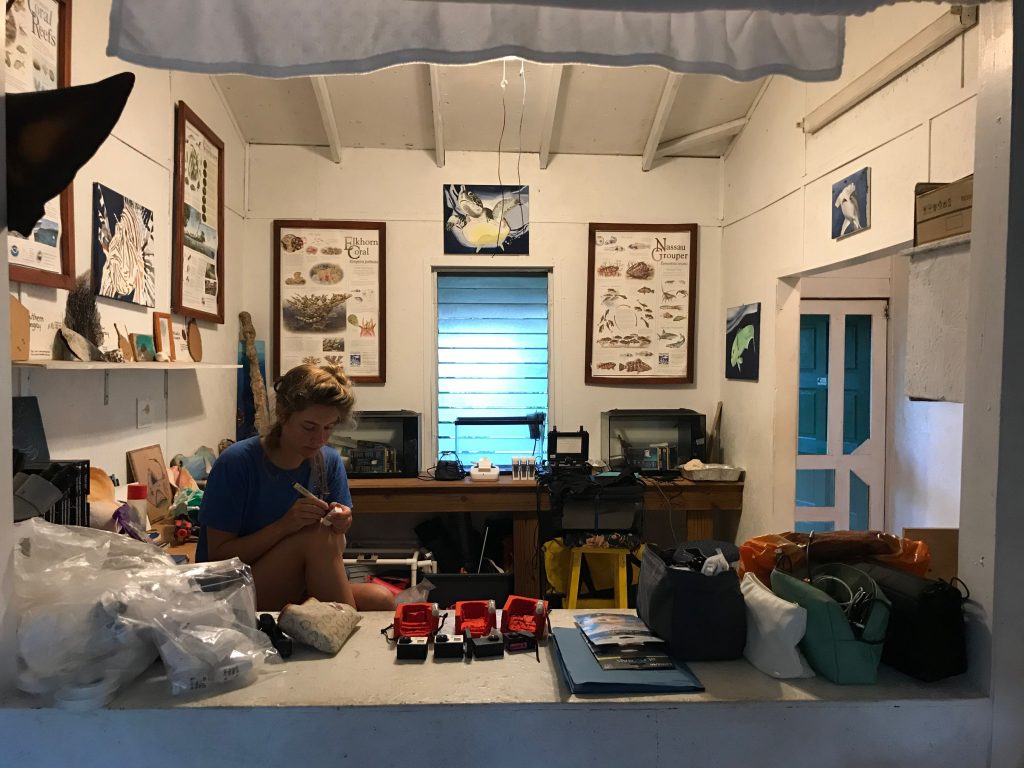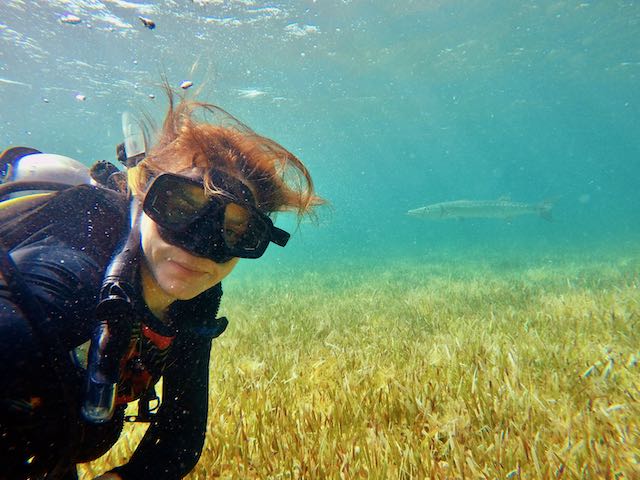
In november Fee Smulders and I visited the Islands Bonaire and Eleuthera (Bahamas) to study the impact of grazing on seagrass ecosystem services. We look back at a very productive, and fun field trip, where we sampled and initiated multiple experiments.
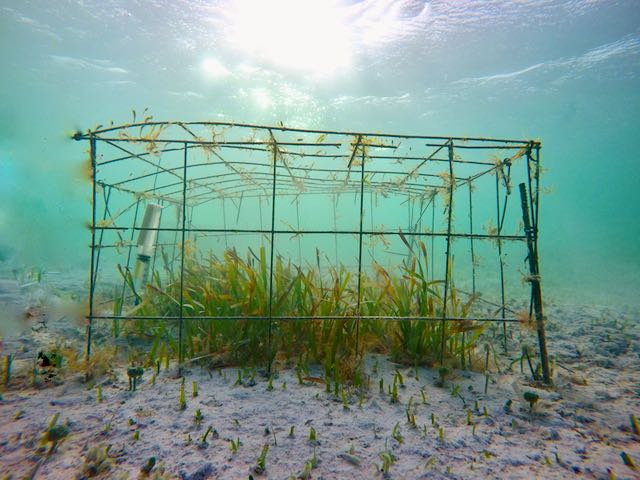
The regulation of large herbivores, such as green turtles, and by apex predators, such as sharks, can influence the overall health and resilience of seagrasses. The absence of sharks and other predators is likely to induce significant alterations in ecosystem function, and the subsequent services that seagrass ecosystems provide. We measure the impact of megafauna on ecosystem services across the TEN network: the recently completed project where we investigated impacts of tropicalisation on seagrasses throughout the Caribbean in a collaborative project with the Smithsonian institute and others led by Justin Campbell.
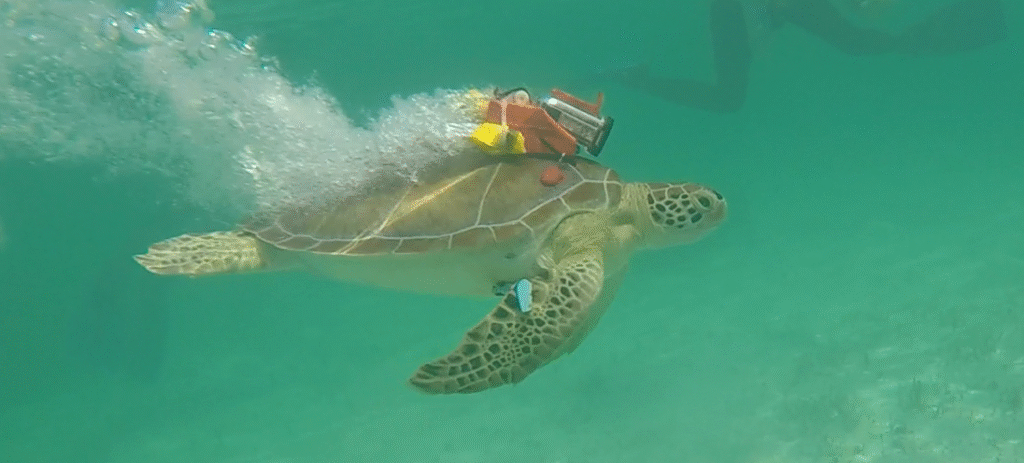
We went to Eleuthera where we have an exciting collaboration with Dr. Owen O’Shea and his team from the centre for ocean research and education. Compared to Bonaire – where sharks are largely absent and turtles abundant – in Eleuthera turtle grazing pressure and shark abundance is high, which makes a great comparison. First we harvested a follow up experiment of the TEN experiment where we measured recovery under different disturbance regimes. Then we designed a follow up project aimed to provide high resolution information on the feeding behavior of green turtles (Chelonia mydas). Specifically, we want to know how interactions with top predators such as sharks impact feeding behavior and subsequent seagrass health .
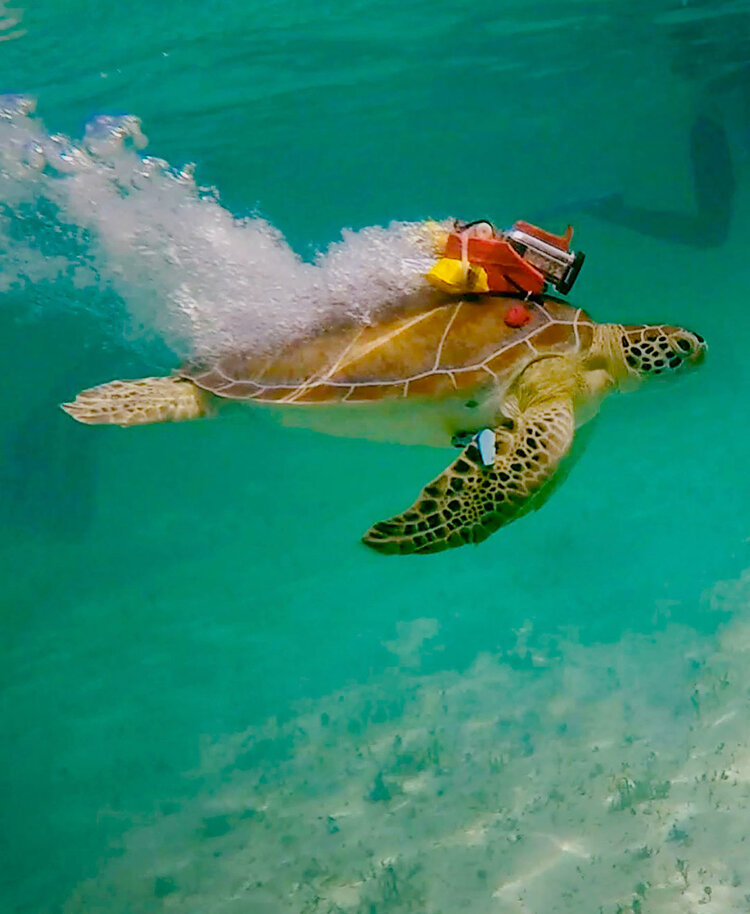
We used turtle-mounted camera devices, with subsequent camera footage aimed at complementing results from our manipulative seagrass experiments to provide a more complete picture of current seagrass-turtle-shark dynamics on Eleuthera.
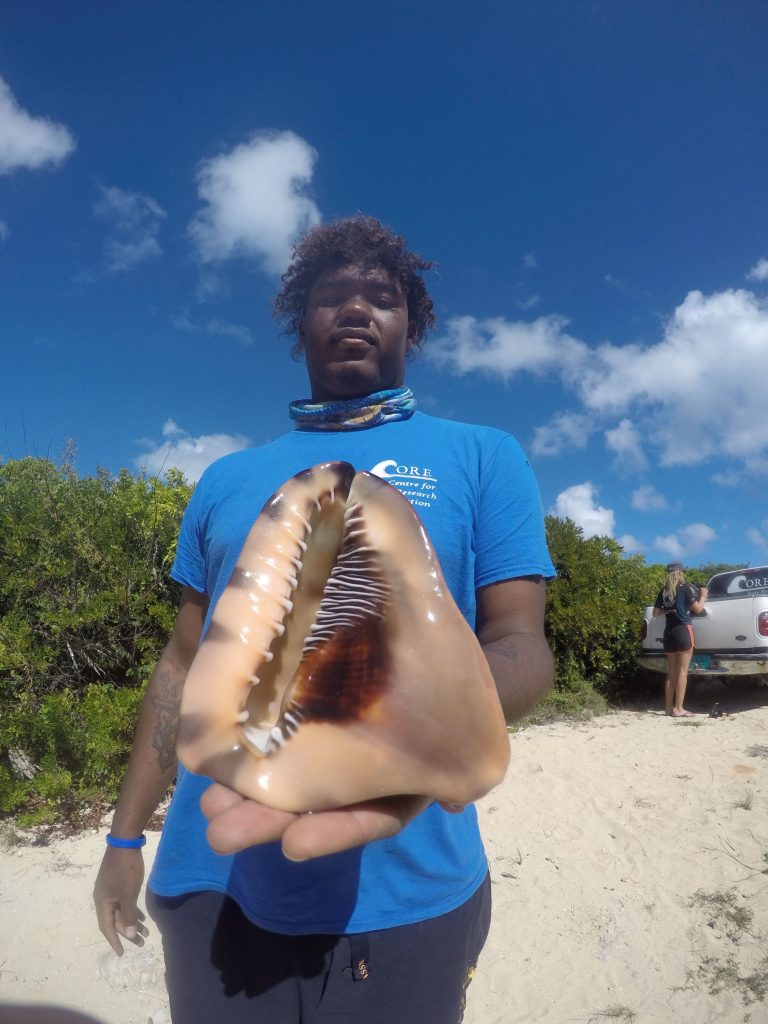
Locally this will provide critical management recommendations to ensure sea turtle and seagrass health in the future, for example at Bottom Harbour in the Bahamas, where increases in eco-tourism may be having as yet unreported impacts on the overall dynamics of this environment. This is critical for conservation measures at this particular location, which is currently known for its turtle and seagrass abundance. We were very excited the have two Bahamian citizens joining our team Delphine and Enriche, they were great in the field! This fieldwork is part of NWO funded VENI grant.