Coastal Rewilding &
Experimental Ecology Research Group

Coastal Rewilding & Experimental Ecology Research Group

Experiment on (invasive) seagrass & turtle grazing, Bonaire

July 30, 2015

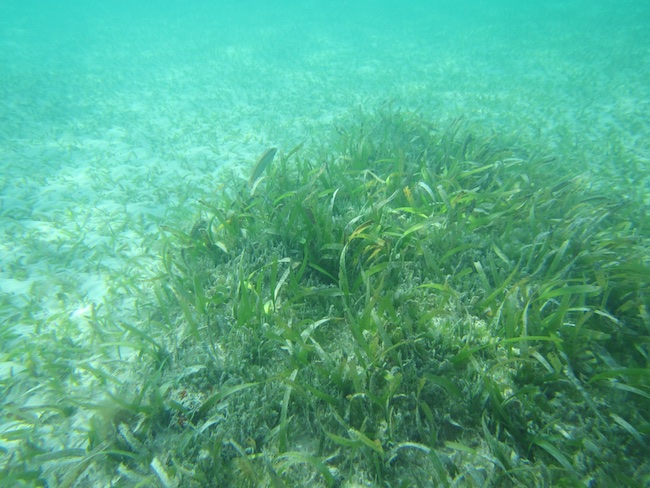
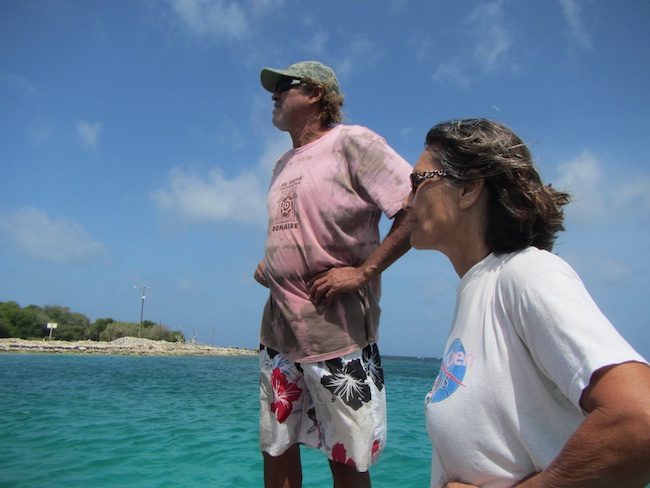
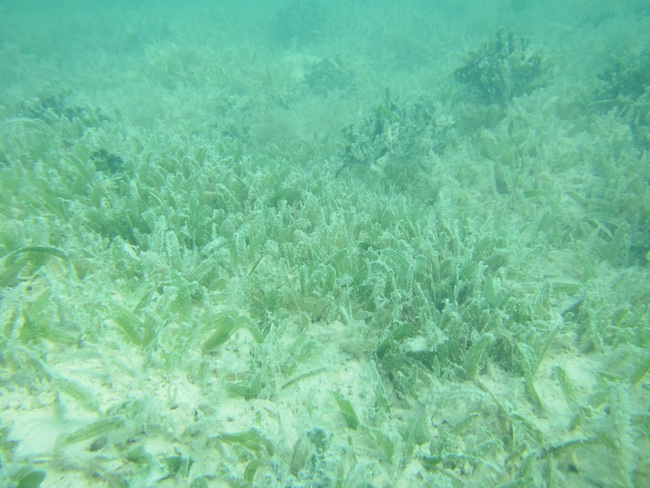
Two weeks ago we arrived on Bonaire. Since then we worked non-stop and we made great progress! The first thing we did was to set up a turtle exclosure experiment on the seagrass beds in Lac Bay, after Funchi (STCB) and Sabine Engel (STINAPA) kindly showed us all the suitable seagrass areas. The native dominant seagrass species here are Thalassia testudinum (or turtle grass) and Syringodium filiforme. However after a quick snorkel survey across the bay the cover of invasive seagrass species Halophila stipulacea seems almost higher.

That is impressive since the species was reported only in 2010 for the first time in Lac Bay. NGO Sea Turtle Conservation Bonaire that works since 1991 on turtles here estimates the sea turtle population (green and hawksbill) between 1000-2000 turtles – predominantly sub-adult green turtles that graze on seagrass in the shallow bay. We know that turtles are reported eating on the invasive seagrass but there are still a lot of unknowns:

  • What the effect of turtle grazing on seagrass production, species composition, nutrient availability, invasive seagrass expansion rate
  • Does H. stipulacea have the same nutritional value?
  • What happens with the carrying capacity of Lac’s seagrass meadow if the native seagrass species is being replaced by the invasive species?

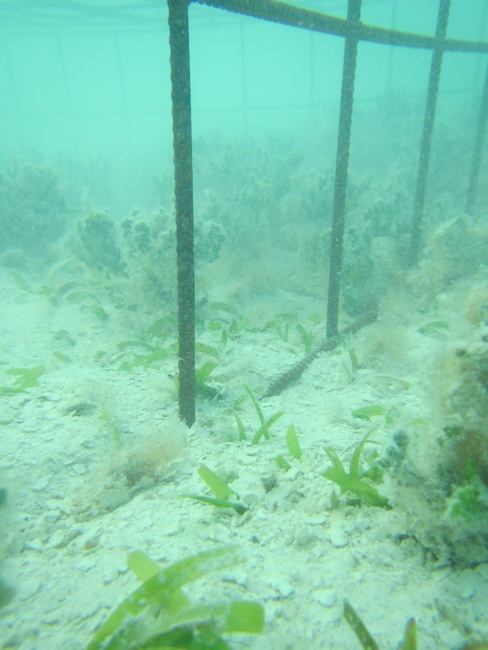
The underwater cages that we use to prevent turtles from grazing certain seagrass patches will be followed during the next years by MSc students in cooperation with Imares, STCB and STINAPA.

Have a look at these first pictures below. And this Facebook post: https://www.facebook.com/karko.bonaire?pnref=story
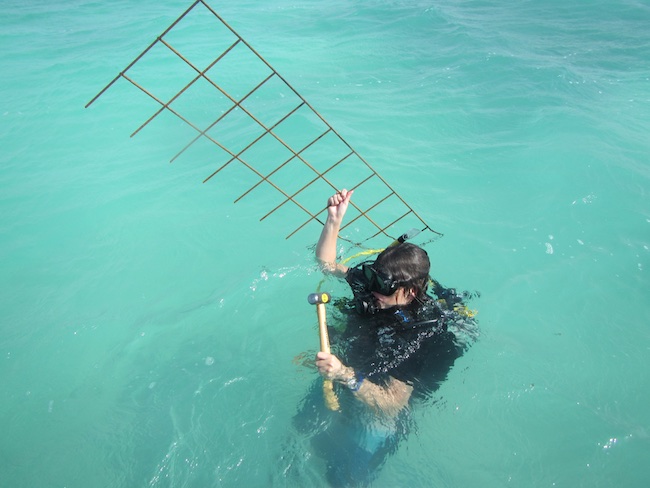
Marjolijn building underwater cage in turbid waters
Invasive Halophila stipulacea between Thalassia
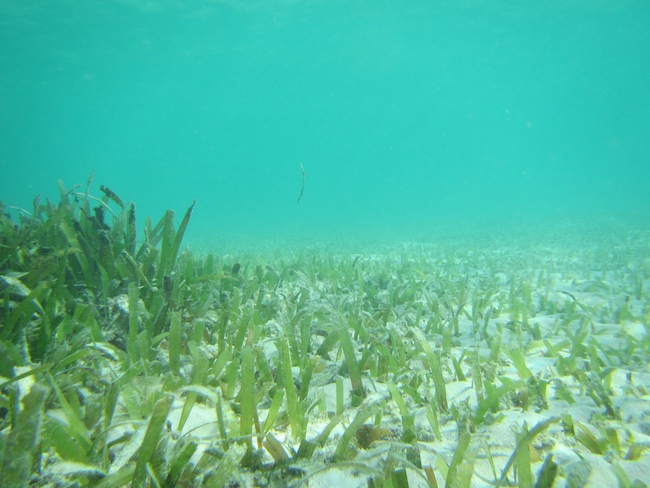
Sharp borders between unglazed and grazed Thalassia testudinum patches. Likely used in a rotational grazing scheme by Green turtles
Funchi (STCB) and Sabine (STINAPA) point out grazed Thalassia seagrass beds of Lac Bay, Bonaire
Grazed Thalassia testudinum in and outside cages at the start of our experiment
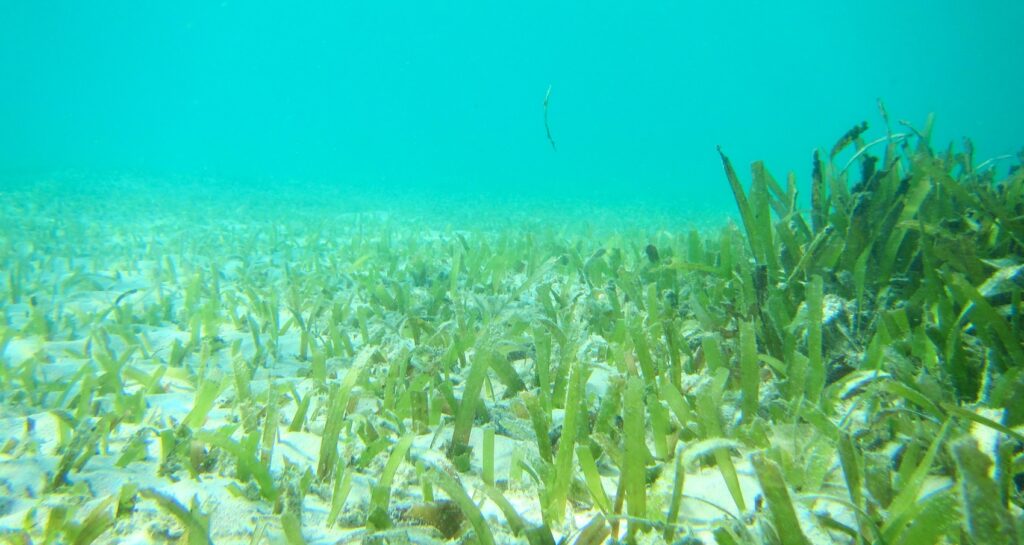
Halophila stipulacea in Lac Bay. Dominant in large parts of the Bay

Share:

About the Author

Related Posts

Belitung fieldwork: The impact of green sea turtles on carbon dynamics in tropical seagrass ecosystems

Read More

Optimism for mitigation of climate warming impacts for sea turtles through nest shading and relocation

Read More

Megaherbivores may impact expansion of invasive seagrass in the Caribbean: our paper in Journal of Ecology

Read More

The potential of using drones and other UAVs in sea turtle research and conservation

Read More