Marjolijn J.A. Christianen
Associate Professor - Head of Coastal Rewilding & Experimental Ecology Research Group
My research line focuses on: (a) coastal ecosystem functioning that studies habitat-modifying species (seagrass, shellfish, salt marshes, mangroves) and associated herbivores and predators and techniques to link the ecological processes and resilience of foundation species; and (b) more recently on trophic rewilding of coastal ecosystems, which focuses on developing novel indicators and restoration applications to enhance ecosystem resilience against global change.
Motivation:
My main aim in conducting research is to contribute scientifically sound input to enhance the responsible management of coastal marine ecosystems.
Biography
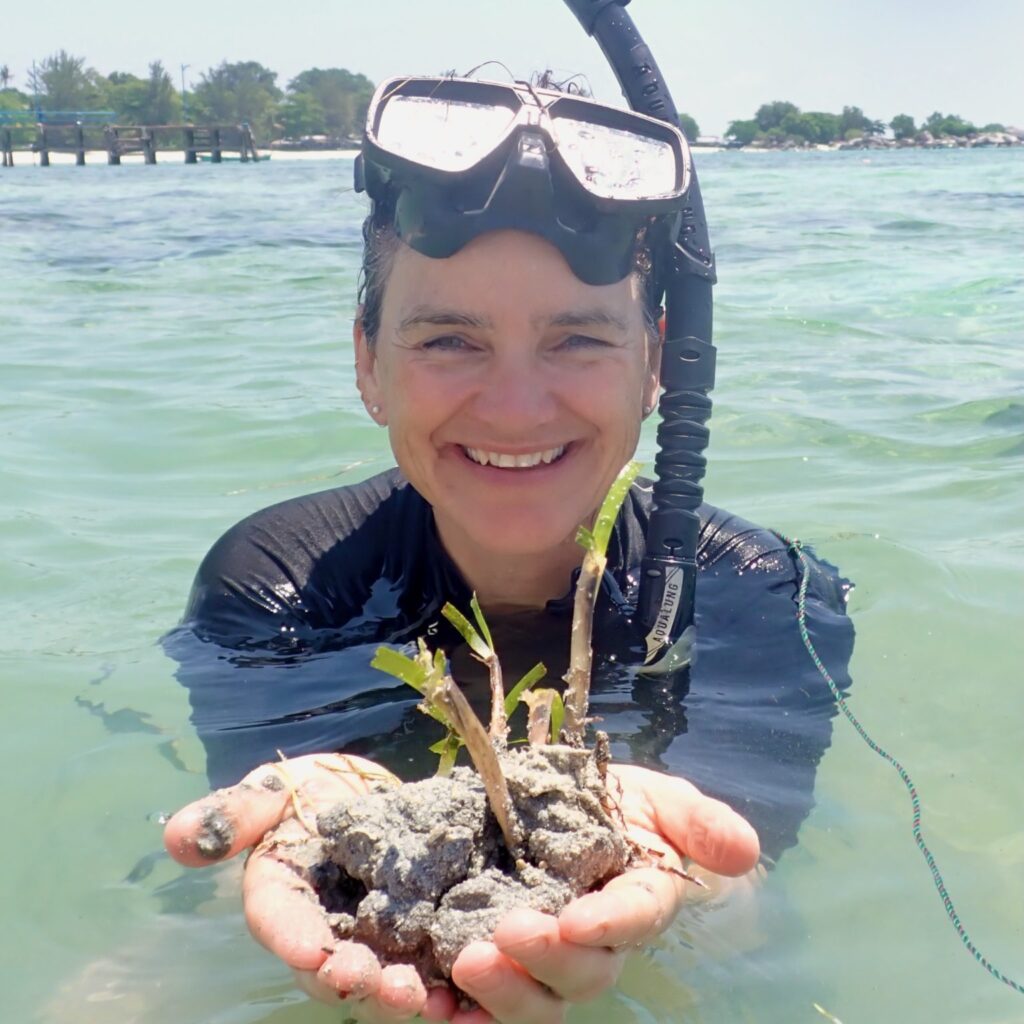
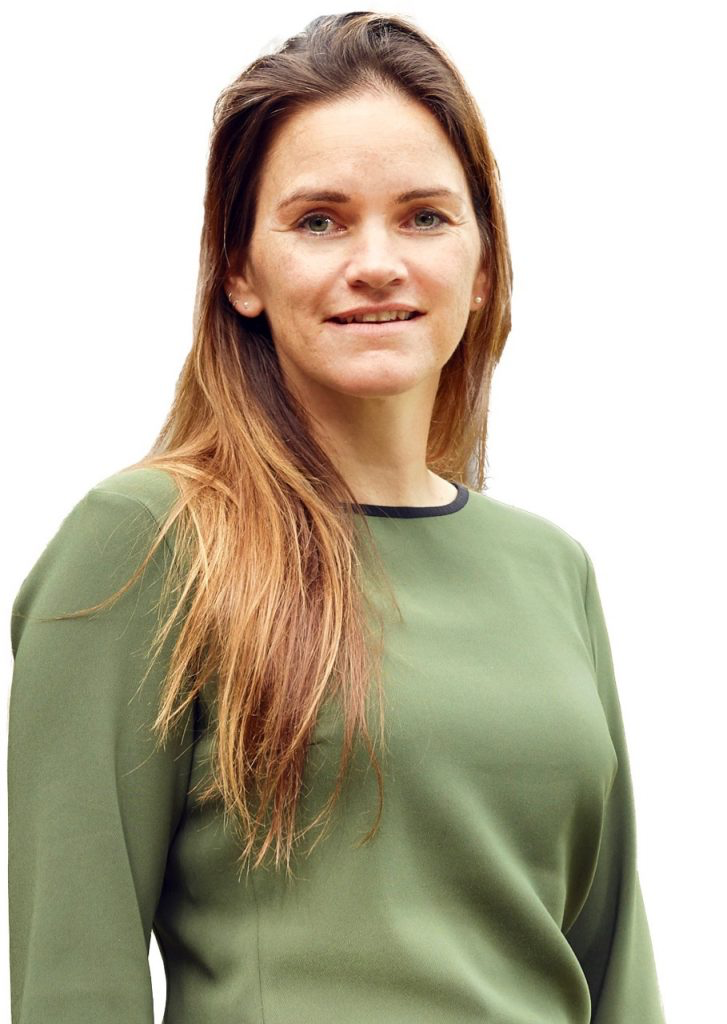
Marjolijn Christianen is an Associate Professor of Marine Ecology at Wageningen University & Research (WUR), The Netherlands, where she leads the Coastal Rewilding & Experimental Ecology Research Group. She joined the Aquatic Ecology and Water Quality Management Group at Wageningen University (WUR), The Netherlands, in 2018. After her Ph.D. (2013) on seagrass and sea turtle ecology in Indonesia, her postdoctoral work at Groningen and Nijmegen Universities focused on food-web ecology, coastal restoration, and megafauna tracking, with extensive fieldwork in the Caribbean, East Africa, North Sea, and Wadden Sea. Before joining WUR, she also worked as a scientific advisor at Waardenburg Ecology (2017).
As a marine ecologist, Marjolijn is fascinated by how habitat-forming coastal organisms—such as seagrass, shellfish reefs, and mangroves—interact with their environment and marine management (e.g. protection of charismatic megafauna) in the context of climate change. Her current research explores how and where rewilding coastal ecosystems can enhance resilience to global change. Her team integrates ecological field experiments with food-web analysis, biogeochemistry, plant physiology, spatial ecology, and animal behavior. Increasingly, they use drone and machine-learning technologies to identify opportunities for ecosystem restoration. Much of her current work builds on her VENI project, a NESSC project and her new NWO M2 project(see list of press releases here). Her aim in conducting research is to contribute scientifically sound input to enhance the responsible management of coastal marine ecosystems. To ensure that research results are also applied she is actively communicating science to the wider public through her blog, media, teaching, art, and intense collaborations with nature managers and policymakers.
Marjolijn is passionate about ensuring that scientific insights are applied in real-world management. She actively communicates science through teaching, outreach, media, and her long-running blog, which documents her fieldwork since 2008 (see news section), and since 2018 also the events during her team’s research projects. On LinkedIn, you may find additional updates or recent work. In addition, you can also find archived posts about completed PhD project and practical info on my previous fieldwork site; Derawan in East -Kalimantan, Indonesia.
A full list of her publications can be found on Google Scholar, Research@WUR, and WUR personal page.
Keywords:
coastal ecosystem functioning, resilience, restoration innovation
Methods:
field experiments on ecosystem functioning, Technology-enabled ecological monitoring (drones, animal-borne cameras, GPS tracking), food web analysis
Research Locations:
Indonesia, Bahamas, European coast, North Sea reefs, Dutch Caribbean
Active projects:
Finalized Projects:
Links & Profiles:
Scopus: 9736789900
ORCID: 0000-0001-5839-2981