Today 2 papers of our group were published online! This papers are the result of a successful collaboration between the University of Groningen, NIOZ and Radboud University, The Netherlands
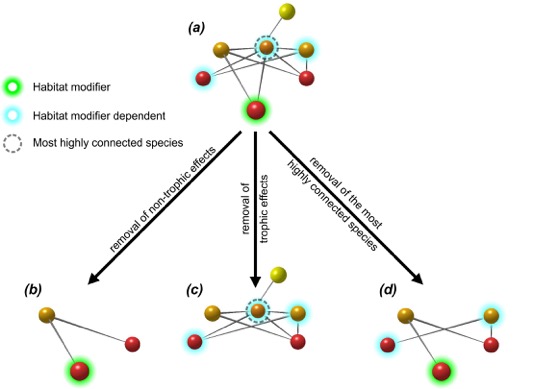
The first study by Els van der Zee et al. demonstrates that food web structure and complexity can be fundamentally shaped by habitat-modifying species. This works through facilitation rather than trophic interactions , since habitat-modifying species provide shelter and suitable attachment sites for other species. This was found after in-depth empirical investigations of two coastal ecosystems: North American temperate fringing marshes and West African tropical seagrass meadows (pdf: download from www.penyu.nl/publication/ ) http://rspb.royalsocietypublishing.org/content/283/1826/20152326 …
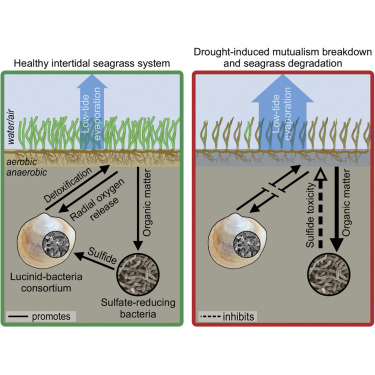
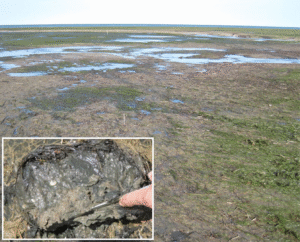
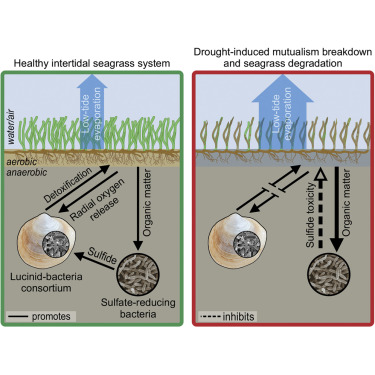
In our second paper in Current Biology by Jim de Fouw et al. found that – beyond coral bleaching – disruption of foundational marine mutualisms can cause rapid and large-scale ecosystem degradation: In a severe hot spell, breaking plant-mollusk partnerships speeds degradation. This we studied in the vast intertidal seagrass beds of Banc d’Arguin, Mauritania (West-Africa). Here the feedback loop between seagrass and lucinid bivalves with sulfide oxidizing gill bacteria drives landscape-scale degradation of tropical intertidal seagrass beds. Media coverage by ScienceNews on “How to keep seagrass ass happy as a clam” (pdf: download from www.penyu.nl/publication/ )